 Toyota has expanded its HiLux range, for the first time offering entry-level WorkMate with automatic transmission.
The new WorkMate Single Cab and Double Cab automatic models take the HiLux 4×2 range to 16 models.
The launch of WorkMate automatic is part of an overall visual and technical upgrade for the now 32-model range of Toyota HiLux 4×2 and 4×4 utilities.
The technical upgrade includes Euro IV compliance for HiLux’ two VVT-i equipped petrol engines: WorkMate’s exclusive 2.7-litre engine and the 4.0-litre V6.
It also includes larger front brakes and improved rear suspension for all 4×2 models, and improved front suspension across the entire range.
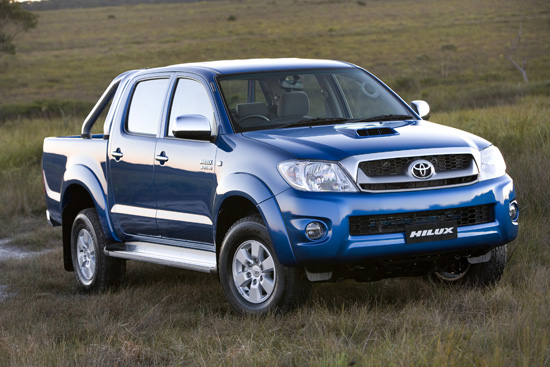
HiLux WorkMate’s Euro IV-compliant 2.7-litre 2TR-FE petrol engine delivers 116kW of power and 240Nm of torque (ECE).
It can be matched to a five-speed overdrive manual or four-speed overdrive automatic transmission.
Toyota offers WorkMate with the option of ABS anti-skid brakes.
In addition, all WorkMate models now have 15-inch steel wheels. These 15-inch steel wheels were previously available on WorkMate only in conjunction with the optional ABS anti-skid brakes.
The adoption of 15-inch wheels on all 4×2 models has allowed Toyota to increase the front brake size, for increased active safety.
HiLux 4×2 now has 275mm-diameter front disc rotors, in lieu of the superseded 255mm-diameter rotors.
The suspension upgrade for HiLux 4×2 includes revised valving for the front and rear dampers, to enhance response to road surface inputs, and achieve a flat, stable ride.
In addition, Toyota has revised the 4×2 model’s rear suspension bushes, to reduce vibration from road surface inputs.
HiLux 4×2 and 4×4 rear suspension now features double-row, roller-type axle bearings, for improved reliability and more stable handling
HiLux’ exterior changes include a new trapezoid shape radiator grille, to complement the design theme of Toyota’s SUVs.
The opening of the lower grille has been enlarged to create a feeling of width and a low centre of gravity.
HiLux’ new exterior features also include a new front bumper design and a new headlamp design with clear lenses for the front turn signal lamps.
High-grade HiLux 4×4 SR5 models adopt a new 15-inch alloy wheel design.
All SR5-grade models now have audio and multi-information display controls on the four-spoke leather-bound steering wheel, as well as a new design chrome/grey radiator grille in lieu of the previous body-coloured grille.
HiLux Double Cab SR5 now has the added feature of cruise control.
A new metallic exterior colour has been adopted from the Kluger colour palate - Tidal Blue.
Inside, upgraded HiLux has a cover on the front passenger vanity mirror and a new shift console on all manual transmission models.
The console has been raised by approximately 30mm, to enhance the vehicle’s appearance.
The light control switch and the wiper control switch have been changed to enhance operability.
Despite the added specification and fresh looks, there is no increase in the recommended retail prices for Workmate models. The new automatic transmission for Workmate is $2000.
Toyota has also maintained prices on 4×2 turbo-diesel models and 4×4 SR V6 petrol single-cab and cab-chassis models.
Although the cost of raw materials has risen sharply, price increases on other models have been kept to a minimum, averaging just one per cent.
 The Toyota Prius continues into 2009 as the best-selling gas-electric hybrid vehicle in the United States and the world. Prius also outsells some conventional midsize cars; such is the model’s popularity that it has essentially become a synonym and a symbol for hybrid vehicles.
As other carmakers begin to introduce hybrid vehicles, the Toyota Prius is in its third generation and 11th year of production. More than one million have been sold worldwide, making Toyota the world leader in hybrid sales and technology.


Performance and Efficiency
Prius delivers exceptional fuel efficiency without compromising performance or comfort. Prius provides the best fuel efficiency ratings of any midsize car sold in America, with estimated EPA ratings of 48 MPG city/45 MPG highway and 46 MPG in combined driving. The seemingly “reversed” city/highway figures reflect the unique powertrain optimized for maximum efficiency in the kind of slow-and-go driving of urban commuters. Prius achieves remarkable fuel efficiency while providing the level of performance expected from a conventional four-cylinder, automatic transmission midsize car, with zero-to-60 mph acceleration in about 10 seconds.
The current Prius was the first Toyota product to employ Hybrid Synergy Drive, the company’s third-generation gas-electric hybrid powertrain technology. Hybrid Synergy Drive is defined as a “full hybrid” system, which means it is capable of operating in gas or electric modes, as well as a mode that combines the power of the gas engine and electric motor.
In the Prius, Hybrid Synergy Drive combines a 1.5-liter four-cylinder Atkinson Cycle gasoline engine and electric drive motor. The gasoline engine produces 76 horsepower and 82 lb.-ft. of torque. As on all other Toyota passenger car engines, Variable Valve Timing with intelligence (VVT-i) helps to optimize power delivery across the engine speed range.
The permanent-magnet electric drive motor produces its maximum power of 50 kW (67 horsepower) from 1,200-1,540 RPM, and peak torque of 295 lb.-ft. from 0-1,200 RPM. The Prius produces 110 combined horsepower with its gas engine and electric motor. The electronically controlled planetary gear-type continuously variable transmission does not have fixed gear ratios, but rather provides infinitely variable ratios in response to driving conditions.
A regenerative braking system further boosts system efficiency: when the Prius is coasting or the brakes are applied, the electric motor functions as a generator, capturing kinetic energy that would normally be lost as heat through the brakes and transforming it into useable electricity to recharge the batteries.
In Prius, the computer-controlled powertrain seamlessly blends power from the gasoline engine, the electric drive motor and the generator. The driver typically does not feel the vehicle changing operational modes. The Prius uses an electronically controlled “by-wire” throttle. A by-wire shift control replaces the traditional gearshift lever and allows tap-of-the-finger shifting using a small joystick mounted on the dash.
The Prius driver can monitor electric-gas power distribution through the Hybrid Synergy Drive system on the standard seven-inch touch-panel display monitor. This screen also displays navigation information on models equipped with the optional navigation system.
The Prius has been certified as a Super Ultra Low Emission Vehicle (SULEV) in California, as well as those states adopting California emission standards. In the rest of the country, Prius is certified as Tier 2, Bin 3. The Prius produces over 70 percent fewer smog-forming emissions than the average new vehicle. In California and states adopting the California rules, Prius is certified as an Advanced Technology Partial Zero Emissions Vehicle (AT-PZEV). The AT-PZEV certification requires the SULEV exhaust standard linked with the ability to meet a zero-fuel-evaporative standard, a 150,000-mile durability demonstration, extended emissions system warranty, and technology deemed by the California Air Resources Board (CARB) to advance future fuel cell vehicles.
Handling and Ride
Prius provides a high level of dynamic driving control. The standard anti-lock brake system (ABS) integrates Brake Assist (BA) and Electronic Brake-force Distribution (EBD). Brake Assist can help apply maximum braking pressure during an emergency stop. Vehicle Stability Control (VSC) is available as an option. VSC helps keep the vehicle going on its intended course by detecting front-wheel slide and rear-wheel slide during cornering, and attempting to control either condition with torque intervention and/or by braking individual wheels. A standard tire pressure monitor system can detect a significant loss in pressure in one or more tires and alert the driver by a warning light.
The Prius Touring Edition offers more spirited driving responses due to its specially tuned suspension and 16-inch alloy wheels. The Prius Touring Edition is distinguished by the alloy wheels, a larger rear spoiler, High Intensity Discharge (HID) headlamps and integrated fog lamps.
Safety and Security
Safety features include front seatbelts with pre-tensioners and force limiters, three-point seatbelts for all rear seating positions; advanced dual front airbags; standard driver and front passenger seat-mounted side airbags; and front and rear side curtain airbags. The driver and passenger advanced dual-stage front airbags and deploy in certain types of collisions and according to collision type and severity. The front passenger seat sensor is equipped with an occupant classification system designed to detect the front passenger’s weight category to determine whether the airbag should deploy. An available rear back-up camera projects an image of what the lens can detect behind the vehicle onto the dash-mounted LCD display when the vehicle is in reverse gear.
Comfort and Convenience
The standard automatic air conditioning system uses an electric-powered air compressor that contributes to the high fuel efficiency and also ensures passenger comfort even when the car is running only on the electric motor. A rear window intermittent wiper, cabin air filtration, power windows and door locks and remote keyless entry are all standard on the Prius. The steering wheel integrates fingertip controls for both the air conditioning and the six-speaker AM/FM/CD audio system. Available convenience packages include cruise control, tonneau cover and heated side mirrors.
Options
Prius customers can order an audio system upgrade that features MP3 capability and an audio auxiliary jack in the center console. The jack enables users to listen to their portable music collection through the audio system. Leather-trimmed seating and leather-wrapped steering wheel – in a choice of two colors – are available to enhance comfort.
Other available options include an auto-dimming rear view mirror with HomeLink® universal transceiver; anti-theft system; fog lights; high-intensity discharge (HID) headlights; voice-activated navigation system; and a JBL Premium AM/FM six-disc in-dash CD changer audio system with satellite radio capability and nine speakers. The JBL audio system integrates Bluetooth® technology, which provides a hands-free communication system when using a compatible Bluetooth-enabled cell phone.
The optional Smart Key allows the driver to unlock the doors by carrying the remote entry key fob and pulling the exterior door handle. Inside, the driver pushes a “power” button on the dash, presses the brake pedal, taps the gear-selector and drives away.
Design
The Prius rides on a 106.3-inch wheelbase that yields generous interior room and a smooth ride. The five-door liftback design not only looks like nothing else on the road, it is also one of the most aerodynamic production vehicles in America. Its super-low 0.26 coefficient of drag helps to minimize interior noise and enhance fuel mileage.
With its “monoform” design, the Prius provides 96.2 cubic feet of passenger room, making it a midsize car by EPA standards. The rear seat in Prius offers a generous 38.6 inches of legroom, about the same as in the Toyota Camry. The liftback design, combined with the standard 60/40 split fold-down rear seatbacks, gives the Prius outstanding cargo capacity and flexibility. Rear cargo room measures 14.4 cubic feet.